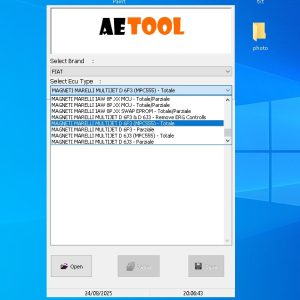
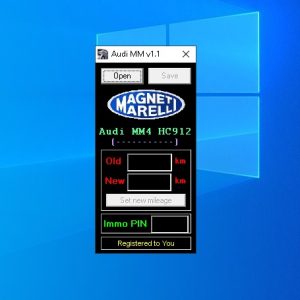
IMMO OFF
ECU Immobilizer Removal — Decoding vs Emulation Explained
When an immobilizer circuit fails — corrupted EEPROM, dead transponder, replaced ECU without coding — the engine cranks but refuses to start. The two industry approaches to restore functionality are fundamentally different, and choosing the wrong one means returning to square one.
Decoding (IMMO OFF via flash/EEPROM patch): The technician reads the ECU binary, locates the immobilizer routine in the firmware, and patches it so the ECU boots unconditionally. The anti-theft check is surgically removed at the binary level. Result: the ECU starts on any key — or no key at all. This is the standard approach for Bosch EDC15, EDC16, ME7.x, and Siemens SID series.
Emulation (IMMO emulator): A small hardware module intercepts the CAN/K-Line immobilizer handshake and replies with a valid “key present” signal. The ECU firmware is untouched. Preferred when the ECU is under warranty or the binary is encrypted (Delphi DCM3.7, Marelli 8GMF).
Why Checksum Matters — The Silent Killer of Bad Patches
Every ECU binary contains one or more checksum blocks that validate firmware integrity at startup. Write an IMMO OFF patch without correcting the checksum and the ECU enters limp mode or refuses to boot entirely. Professional tools in this category handle checksum recalculation automatically for all supported platforms:
ECU Platform
IMMO Location
Checksum Type
Recommended Method
Bosch EDC15 / ME7.x
Flash (EEPROM + ROM)
CRC16 + byte sum
Binary patch (Decoding)
Bosch EDC16 / EDC17
Flash only
CRC32 (multi-block)
Binary patch — checksum critical
Marelli IAW 4.8 / 5.9 / 8GMF
EEPROM (93C56/93C86)
EEPROM sum byte
EEPROM patch or emulator
Siemens SID803 / SID206
Flash + EEPROM
CRC16 per block
Binary patch
Delphi DCM3.7 / MT92
Flash (encrypted)
Proprietary
Emulation preferred
What You Need to Apply These Files
EEPROM-based patches: Any EEPROM programmer — T-Code Pro, MiniPro TL866, or dedicated UPA USB
Flash-based patches: BDM100, KTag, Kess V2, or KT200 — OBD2/ELM327 cannot read or write ECU flash
Emulators: Plug-and-play hardware (no programmer needed) — connects to ECU connector
WinOLS or Hex Editor: To verify the patch before writing — always compare checksums manually on critical ECUs
Frequently Asked Questions
{
“@context”: “https://schema.org”,
“@type”: “FAQPage”,
“mainEntity”: [
{
“@type”: “Question”,
“name”: “Is IMMO OFF the same as key programming?”,
“acceptedAnswer”: {
“@type”: “Answer”,
“text”: “No. Key programming adds a new transponder key to the ECU’s authorized list. IMMO OFF removes the immobilizer check entirely from the ECU firmware or intercepts it via emulator. Both solve a no-start condition, but through opposite approaches.”
}
},
{
“@type”: “Question”,
“name”: “Can I apply an IMMO OFF file with an ELM327 adapter?”,
“acceptedAnswer”: {
“@type”: “Answer”,
“text”: “No. ELM327 is an OBD2 diagnostic interface — it cannot read or write ECU flash memory or EEPROM. You need a dedicated ECU programmer such as BDM100, KTag, Kess V2, or KT200 depending on the target ECU platform.”
}
},
{
“@type”: “Question”,
“name”: “What happens if I flash an IMMO OFF file without correcting the checksum?”,
“acceptedAnswer”: {
“@type”: “Answer”,
“text”: “The ECU will detect firmware corruption and enter limp mode, refuse to start, or display a permanent fault code. All files in this category include checksum-corrected binaries ready for direct flashing.”
}
},
{
“@type”: “Question”,
“name”: “Do these tools work on Bosch EDC17 with encryption?”,
“acceptedAnswer”: {
“@type”: “Answer”,
“text”: “EDC17 variants with Tricore architecture can be patched via BDM or JTAG interface. Some newer variants require bench programming. Each file listing specifies the supported ECU hardware number (HW) and software version (SW).”
}
}
]
}
Showing all 7 results