The FPT NEF engine family — 4.5L four-cylinder and 6.7L six-cylinder variants — powers more CNH construction equipment than any other engine in the lineup. Found in Case wheel loaders, backhoe loaders, crawler dozers, and excavators from Tier 3 through Tier 4 Final, the NEF Tier 3 Electronic Engine manual is the baseline reference for injection system diagnosis, valve train service, and emissions-related repair procedures.
Manual Reference: 465155422-002 — NEF Tier 3 Electronic Engine
The FPT-Iveco CNH service manual for the NEF Tier 3 Electronic Engine (465155422-002) covers both the 4-cylinder (4.5L) and 6-cylinder (6.7L) variants used across the CNH construction equipment range. The engine identification system is documented in full: the last two digits of the machine model number indicate engine displacement, and the number in parentheses indicates cylinder count.
Engine Coverage by Machine
- 4-cylinder (4.5L NEF) — 650K, 750K, 750L, 850K II/III, 850L dozers; 521-series wheel loaders
- 6-cylinder (6.7L NEF) — 1150K III, 1650L, 1850K III/LGP dozers; 621-821 series wheel loaders; CX130B-CX250C excavators
Technical Sections
- Electronic Control Unit (ECU): The EDC7 engine management system controls injection timing, injection quantity, boost pressure limiting, and EGR valve position. The manual documents every parameter table, sensor signal range (crankshaft speed sensor: 0.5V-1.5V AC at 700 rpm), and fault code table with probable cause ranking.
- Common Rail Fuel System: Rail pressure target values by engine speed and load. High-pressure pump removal and installation torque sequence. Injector return flow test procedure — maximum allowable return flow per injector documented to identify injector wear before complete failure.
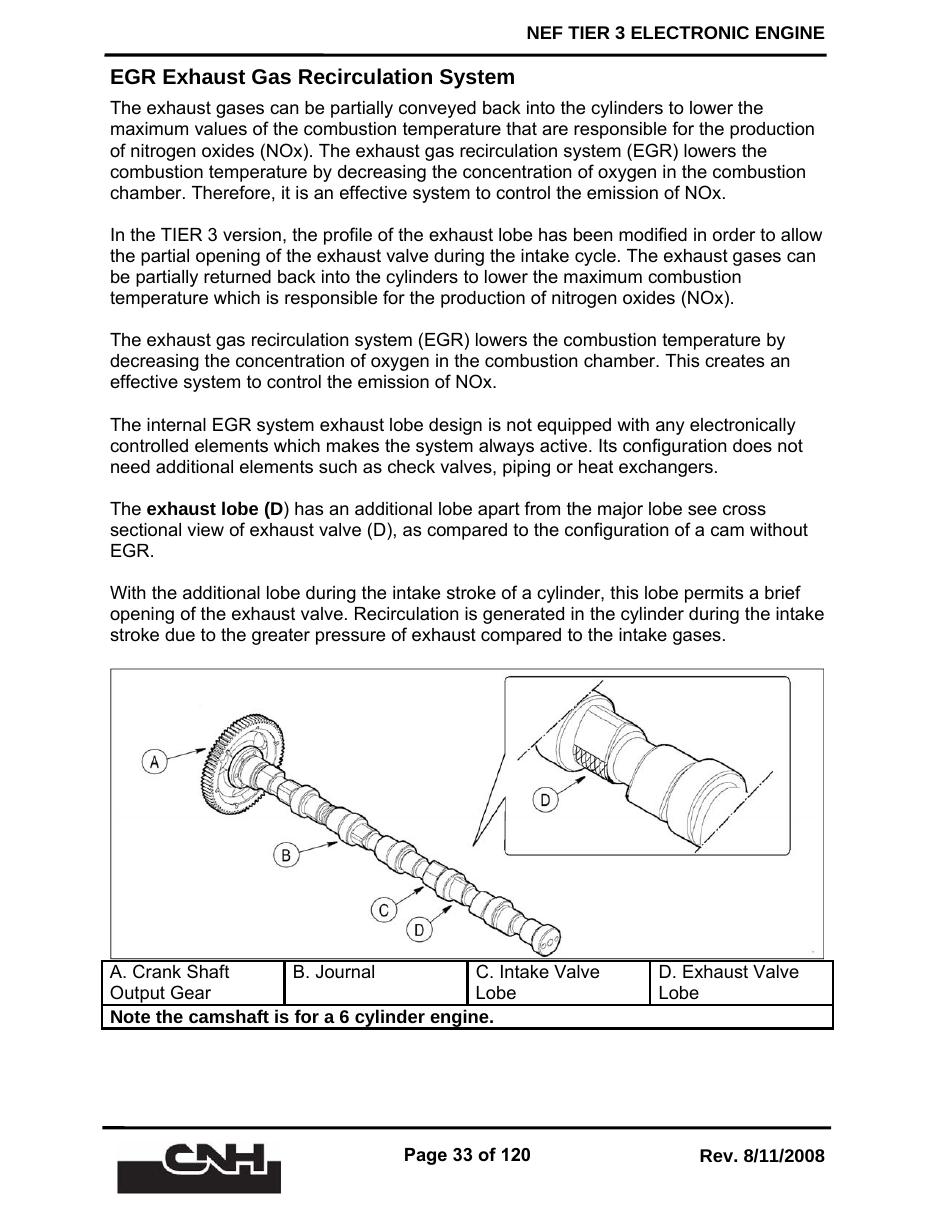
- Valve Train: Valve clearance specifications — intake 0.30 mm / exhaust 0.60 mm (cold, engine stopped minimum 6 hours). Rocker arm shaft removal sequence. Camshaft bearing journal diameter limits and running clearance.
- Cooling System: Water pump impeller-to-housing clearance (0.30-0.60 mm). Thermostat opening temperature (82-88 degrees C). Coolant specification: OAT (Organic Acid Technology) extended-life coolant, 50/50 premix.
- Lubrication System: Oil pump pressure test values (minimum 3.5 bar at 2000 rpm). Main bearing running clearance (0.040-0.098 mm). Rod bearing running clearance (0.025-0.074 mm).
Key Specifications — FPT NEF 6.7L Tier 3
- Valve clearance (cold): Intake 0.30 mm / Exhaust 0.60 mm
- Main bearing clearance: 0.040-0.098 mm
- Rod bearing clearance: 0.025-0.074 mm
- Minimum oil pressure at 2000 rpm: 3.5 bar
- Thermostat opening temp: 82-88 degrees C
- Coolant capacity (6.7L): 16 L
Full Diesel Engine Collection — 70 PDFs
- FPT-Iveco CNH Engines — NEF Tier 3, NEF Electronic, 445M2/445TM2/668TM2, cursor series
- Fiat-Allis and Allis-Chalmers Engines — Legacy diesel engines for older machines
- Ford Engines — Ford Power Stroke and BSD diesel variants used in older CNH equipment
- Hino Engines — Hino J05E and J08E variants used in some Fiat-Hitachi excavators
- IHI Shibaura Engines — Compact 3- and 4-cylinder Shibaura engines for small excavators
- VM Engines — VM Motori diesel variants for compact machines
Download the Diesel Engine Manual Collection
Frequently Asked Questions
How do I identify which NEF variant my machine has?
The engine variant code is stamped on the engine block near the injection pump mounting. The service manual includes a full engine identification table — the last two digits of the model code indicate displacement (45 = 4.5L, 67 = 6.7L), and the cylinder count appears in parentheses.
Does the Tier 3 manual cover Tier 4 Final engines?
No — Tier 4 Final uses SCR (Selective Catalytic Reduction) with DEF fluid injection, which requires a separate manual section. The Tier 4 Final NEF manuals are included in this collection as separate PDFs.
Can I use this manual to diagnose EDC7 fault codes without a scan tool?
The manual includes the full fault code table with sensor signal ranges, wiring check procedures, and component substitution tests that allow diagnosis with a digital multimeter. A scan tool accelerates diagnosis but is not required for all faults.