Imagine pulling into a service bay only to discover your Volkswagen Sharan’s DPF warning light is flashing, and the engine control unit is warning of excessive soot buildup. With the right diagnostic tool, you can quickly read fault codes, clear them, and even perform a full DPF regeneration without a costly visit to the dealership. This step‑by‑step guide shows exactly how to use VCDS DRV 25.3.2 (and the older 21.9.0) to reset ash mass and bring your Sharan’s diesel particulate filter back to optimal performance.
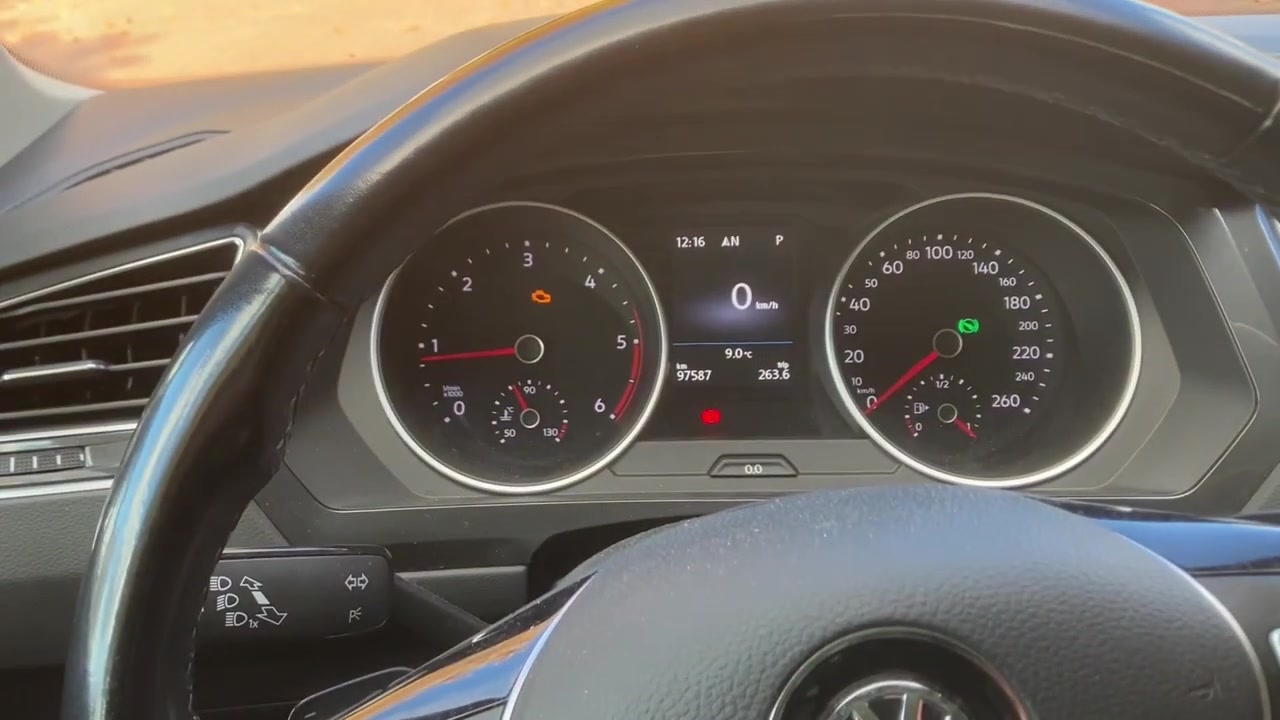
What You Will Learn
- How to connect VCDS to a Volkswagen Sharan 2.0 L TDI.
- Reading and interpreting fault codes related to the DPF.
- Viewing live measuring values such as soot mass, ash mass, and exhaust gas temperature.
- Executing a basic DPF service regeneration safely.
- Performing the ash‑mass adaptation (reset) after a successful regeneration.
- Key safety tips to avoid fire hazards during forced regeneration.
Step‑By‑Step Walkthrough
- Prepare Your Tools. Install VCDS DRV 25.3.2 (or 21.9.0) on a Windows laptop, connect the Hex‑Cable to the OBD‑II port under the driver’s side dashboard, and launch the software. Verify that the cable’s LED indicators show a solid green connection before proceeding.
-
Select the Correct Control Module. In the main VCDS window, click Select Control Module → Engine → 01‑Engine. This loads the ECU responsible for DPF monitoring.
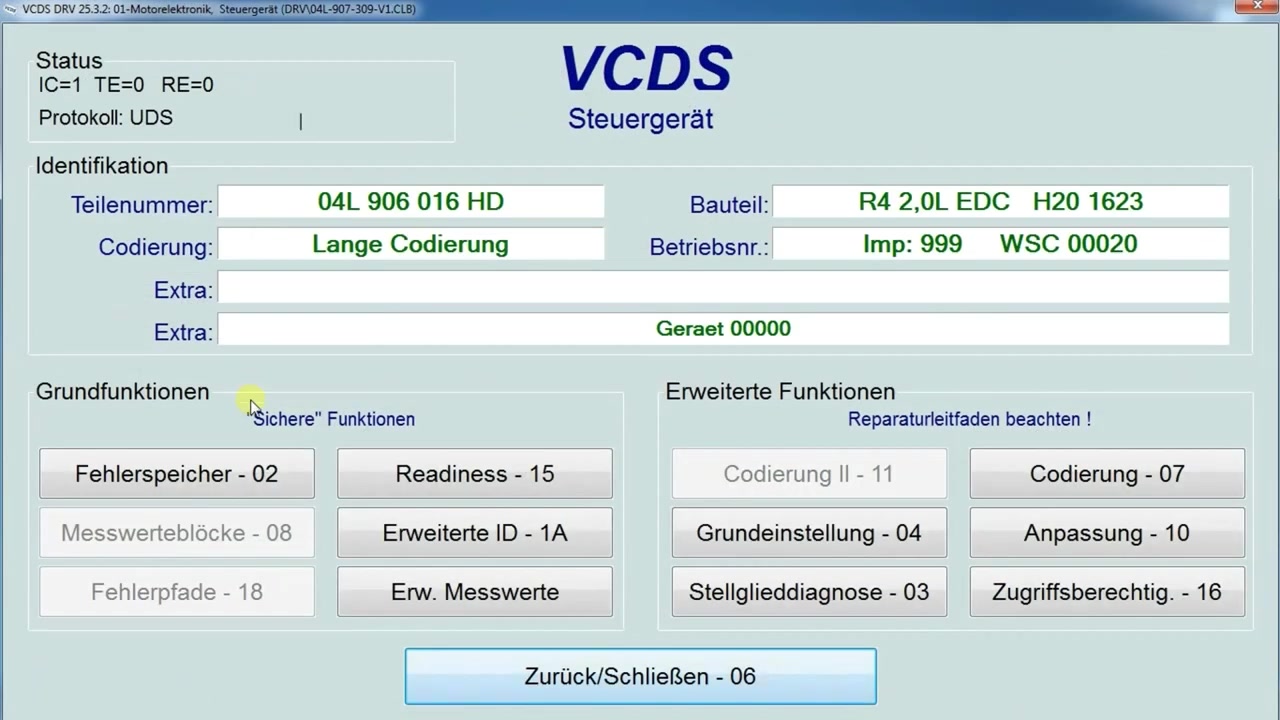
VCDS fault codes screen showing two errors: ‘Dieselpartikelfilter – Russbeladung zu hoch’ (DPF – Soot loading too high) and ‘Dieselpartikelfilter – Regenerationsdauer’ (DPF – Regeneration duration). - Read Fault Codes. Click the Read Fault Codes button. Any DPF‑related codes (e.g., P2002 – “DPF Soot Accumulation” or P2463 – “DPF Ash Accumulation”) will appear in the list. Note the code numbers and descriptions for later reference.
-
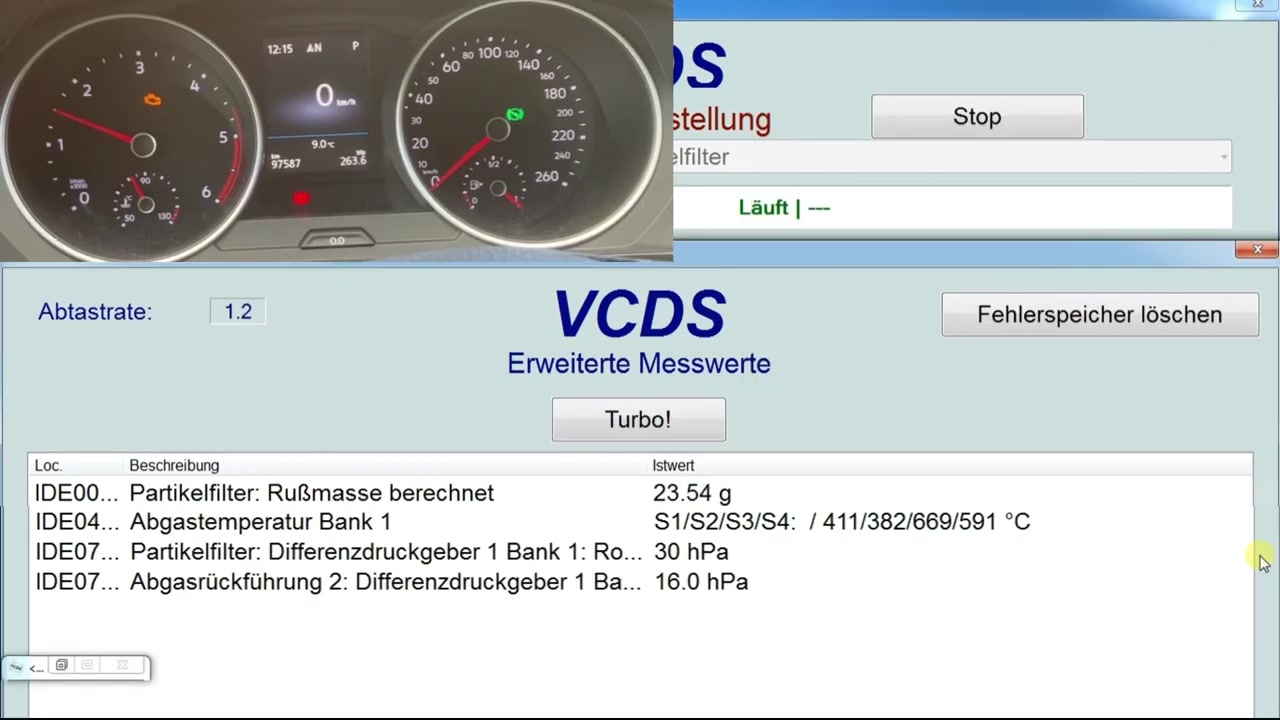
View Extended Measuring Values. Switch to the Measuring Blocks tab and enable Extended Measuring Values. Scroll to the block titled DPF – Soot Mass and DPF – Ash Mass. Record the current soot and ash percentages; you’ll need the original ash mass value before resetting it.
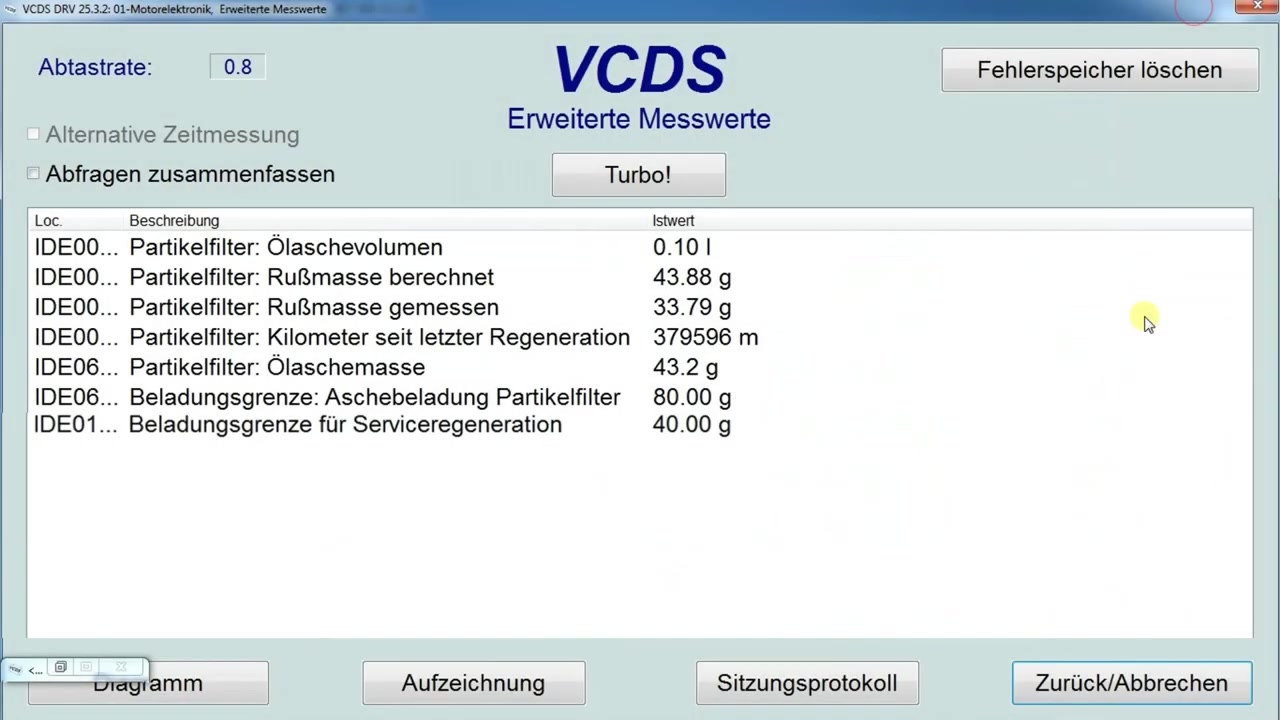
VCDS extended measuring values showing ‘Partikelfilter: Ölaschevolumen’, ‘Rußmasse berechnet’ (calculated soot mass), ‘Rußmasse gemessen’ (measured soot mass), ‘Ölaschemasse’ (oil ash mass), and ‘Beladungsgrenze: Aschebeladung Partikelfilter’ (ash loading limit). - Check Regeneration Status. Still in the Measuring Blocks, locate DPF – Regeneration Status. If the status shows “Ready” but soot is above 70 %, a forced regeneration is advisable. Do NOT start a forced regeneration if soot > 80 % or ash > 30 % – the risk of a fire inside the exhaust manifold becomes significant.
-
Start a Basic DPF Service Regeneration. Go to Basic Settings → DPF Service Regeneration. Follow the on‑screen prompts:
- Close the vehicle’s hood.
- Turn off all electrical consumers (air‑conditioning, heated seats, infotainment).
- Press the accelerator pedal to 100 % for 5 seconds, then release.
The ECU will begin a low‑temperature burn‑off cycle. Monitor the exhaust gas temperature; it should rise steadily to 350‑400 °C.
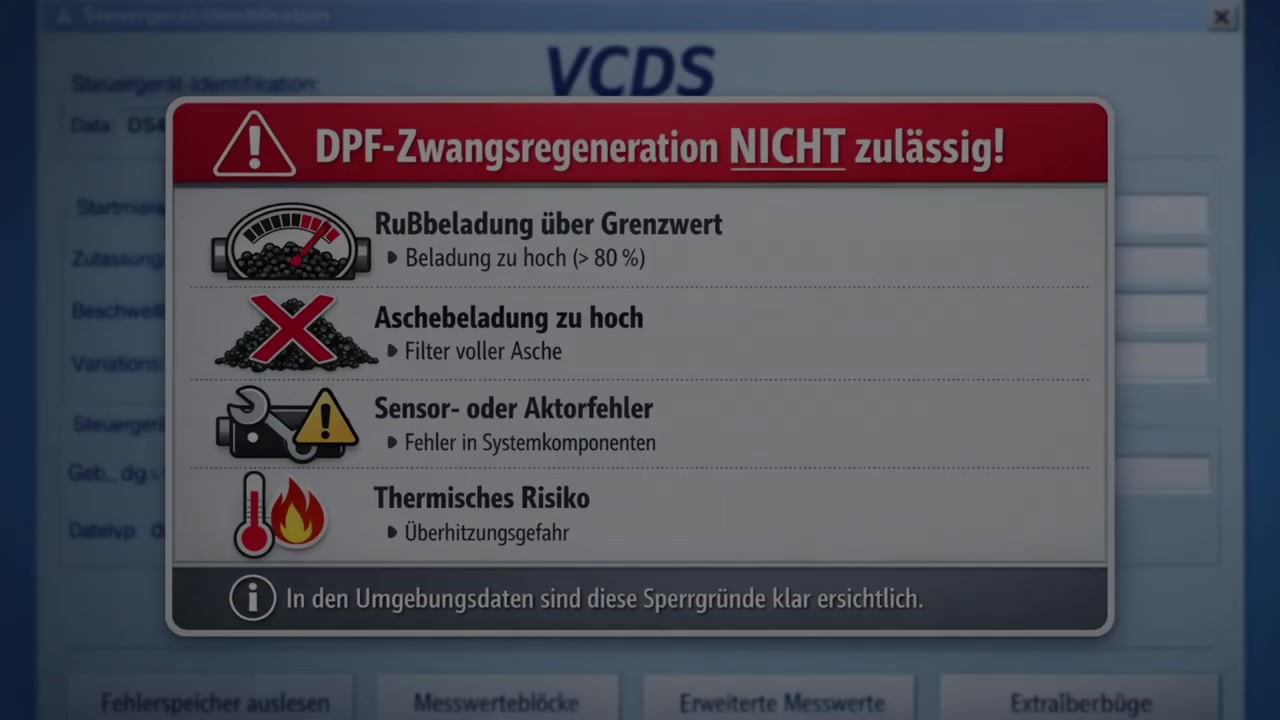
VCDS warning message: ‘DPF-Zwangsregeneration NICHT zulässig!’ (DPF forced regeneration NOT allowed!) with reasons like soot/ash overload, sensor errors, and thermal risk. - Monitor the Regeneration Progress. While the burn‑off runs, keep an eye on the Exhaust Gas Temperature block. If the temperature drops below 300 °C for more than 30 seconds, abort the process and investigate possible injector or turbo issues.
- Complete the Regeneration. Once the ECU signals “Regeneration Completed,” the soot mass should drop below 10 %. Verify by re‑reading the measuring values. If the ash mass remains high, you’ll need to perform the ash‑mass adaptation.
-
Perform Ash Mass Reset (Adaptation). Navigate to Adaptations → DPF Ash Mass Reset. Enter the original ash mass value you recorded earlier, then click Start. The ECU will store this baseline and calculate future ash accumulation correctly.
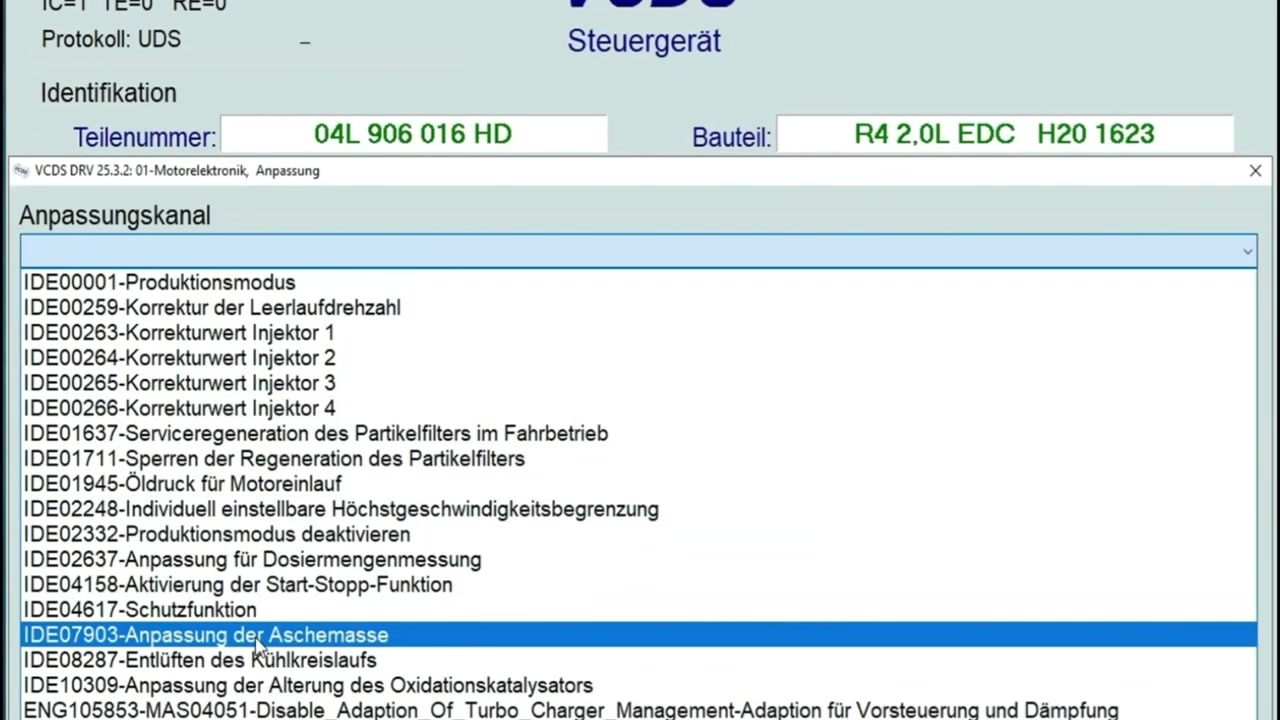
VCDS adaptation channel ‘IDE07903-Anpassung der Aschemasse’ (Adaptation of Ash Mass) with ‘Gespeicherter Wert’ (stored value) and ‘Neuer Wert’ (new value) fields. - Clear Fault Codes. Return to the Fault Codes screen and click Clear Fault Codes. Confirm the action. The DPF warning light should now be off, and the ECU will no longer log the previous codes.
-
Test Drive. Take the Sharan for a 15‑minute drive at varied speeds. After the drive, re‑connect VCDS and verify that no new DPF codes have appeared and that soot/ash values remain within normal limits.
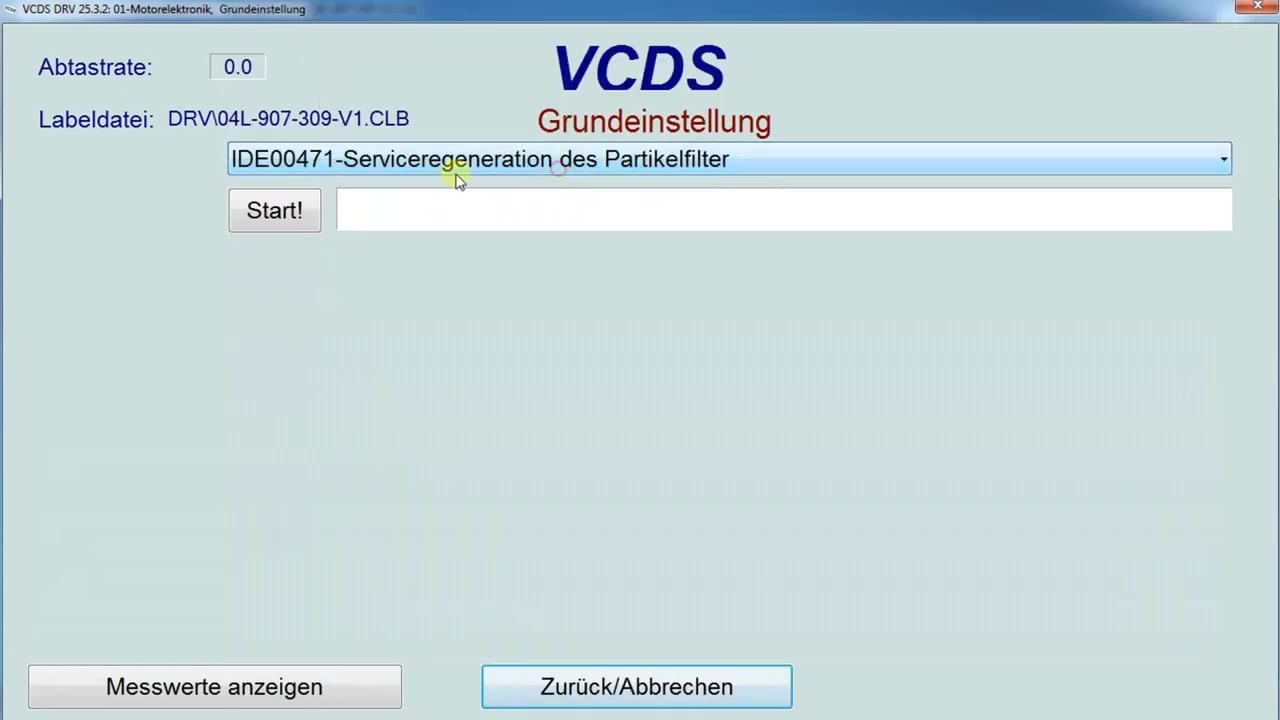
VCDS basic settings screen for ‘ServiceRegeneration des Partikelfilter’ (Service Regeneration of the Particulate Filter) with a live view of the car’s dashboard. - Document the Procedure. Save a copy of the fault‑code log and measuring‑value screenshots. This documentation is useful for future service intervals and can be shown to a dealer if warranty work is required.
Key Features of VCDS DRV 25.3.2, VCDS DRV 21.9.0
- Comprehensive access to all VW/Audi ECUs, including engine, transmission, ABS, and DPF modules.
- Live data streaming with customizable measuring blocks for soot mass, ash mass, and exhaust temperature.
- Fault code reading, clearing, and detailed description database.
- Basic settings for service‑type DPF regeneration, injector coding, and throttle adaptation.
- Adaptation functions that allow ash‑mass reset, DPF pressure sensor calibration, and more.
- Built‑in safety warnings that prevent forced regeneration under unsafe soot/ash conditions.
- Exportable logs (CSV, PDF) for record‑keeping and warranty claims.
Compatible Vehicles and ECUs
The tutorial focuses on the Volkswagen Sharan 2.0 L TDI (model years 2010‑2020). VCDS also supports the following ECUs in this platform:
- 01‑Engine (ME7.5) – controls DPF, fuel injection, and emissions.
- 02‑Transmission (DPF‑linked gearbox).
- 09‑ABS/ESC.
- 10‑Airbag.
- 21‑Instrument Cluster.
- 73‑Central Gateway (for advanced coding).
Pro Tips
- Never start a forced DPF regeneration if soot loading exceeds 80 % or ash loading is above the manufacturer’s limit – the high temperature can ignite ash deposits.
- Always write down the original ash‑mass value before resetting it; after a successful regeneration, restore this value to keep the ECU’s ash‑tracking algorithm accurate.
- Follow every on‑screen instruction precisely: press/release the accelerator pedal at the correct intervals, keep the hood closed, and switch off all electrical consumers to avoid voltage spikes.
- Use a high‑quality VCDS cable (hex‑cable with 16‑pin connector) to ensure stable communication, especially when reading live measuring values.
- After clearing codes, perform a short “idle‑rev” test (engine at 1500 rpm for 2 minutes) to let the ECU re‑learn sensor baselines.
What Real Users Are Asking
❓ My Sharan shows a DPF warning but the soot mass is only 45 %. Should I still do a forced regeneration?
When soot is below 70 %, the ECU usually schedules an automatic passive regeneration during normal driving. A forced regeneration is only recommended if the soot exceeds 70 % or if you receive a specific DPF‑related fault code (e.g., P2002). In your case, continue normal driving and monitor the soot level; a forced regeneration is not necessary yet.
❓ After resetting ash mass, the DPF warning light comes back immediately. What am I missing?
The ash‑mass reset must be performed *after* a successful regeneration and *before* clearing the fault codes. If you clear the codes first, the ECU may re‑log the ash‑mass error. Repeat the adaptation, ensure the ash value you entered matches the original pre‑reset value, then clear the codes and test drive.
❓ Can I use VCDS on a diesel‑engine Sharan that has a dual‑clutch transmission?
Yes. VCDS accesses both the engine ECU (01) and the transmission ECU (02). For DPF work you only need the engine module, but if you notice shifting issues, you can also read fault codes from the transmission control unit using the same cable.
Frequently Asked Questions
- Do I need to disconnect the battery before using VCDS?
- No. VCDS works with the vehicle’s live electrical system. Disconnecting the battery can erase adaptation data, so keep the battery connected throughout the procedure.
- How long does a basic DPF service regeneration take?
- Typical regeneration cycles last 10‑15 minutes, depending on soot load and exhaust temperature. The software will display a countdown timer.
- Is the ash‑mass reset a one‑time procedure?
- It should be performed after each successful forced regeneration. The ECU uses the ash‑mass baseline to calculate future ash accumulation, so resetting it each time keeps the monitoring accurate.
- Can I perform this procedure on a gasoline‑engine Sharan?
- No. The DPF and ash‑mass functions are exclusive to diesel engines. Gasoline models use a catalytic converter instead of a DPF.
Ready to take control of your Volkswagen Sharan’s emissions system? Download VCDS from firstdiag.com and explore complementary diagnostic solutions such as ODIS for deeper VW/Audi coding or JPRO for comprehensive JLR diagnostics. Empower yourself with professional‑grade tools and keep your Sharan running clean and efficient.